
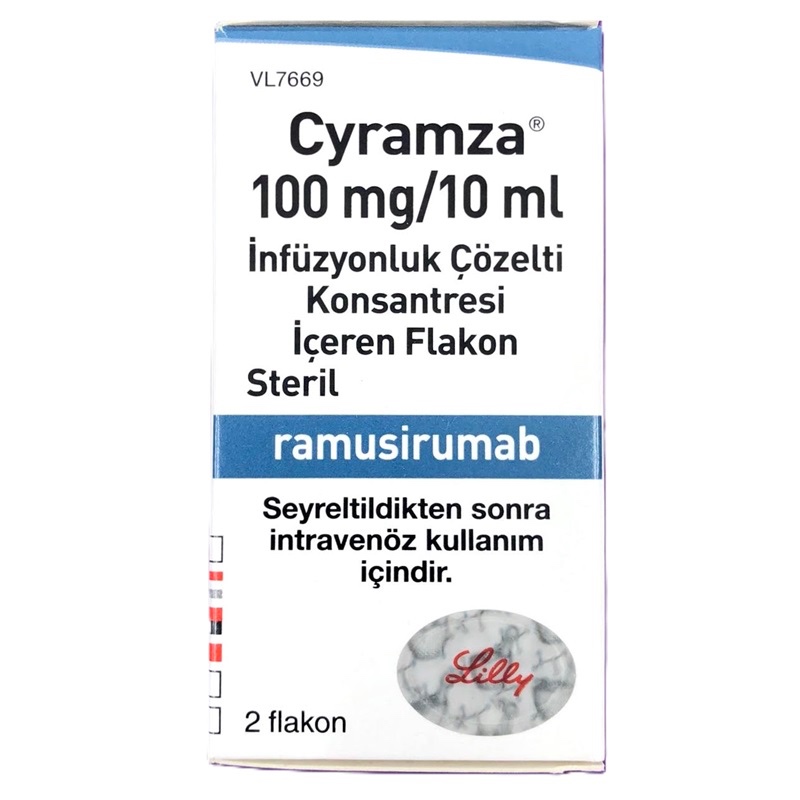
Cyramza 100 mg contains ramucirumab, a targeted anticancer medicine classified as a monoclonal antibody. It works by blocking vascular endothelial growth factor receptor 2 (VEGFR2), a protein involved in the formation of new blood vessels that supply oxygen and nutrients to tumors. By inhibiting this pathway, ramucirumab can help restrict the development of new blood vessels that support cancer growth.
VEGFR2 plays an important role in angiogenesis, the process through which new blood vessels form. Some tumors rely on this process to grow and spread. Ramucirumab binds to VEGFR2 and prevents the activation of signals that promote blood vessel formation, helping interfere with the tumor’s blood supply.
Cyramza is used to treat certain types of advanced or metastatic gastric or gastroesophageal junction cancer, non-small cell lung cancer (NSCLC), colorectal cancer, and hepatocellular carcinoma (liver cancer). Depending on the cancer type, it may be administered alone or in combination with other anticancer medicines.
Cyramza 100 mg is supplied as a solution containing 100 mg of ramucirumab in 10 mL for intravenous infusion. It is a prescription medicine that must be administered under the supervision of qualified healthcare professionals. Treatment eligibility depends on the cancer diagnosis, previous treatments, and individual health factors.
How Does Cyramza 100 mg Work?
Cyramza 100 mg is a targeted cancer medicine containing ramucirumab. It belongs to a class of medicines called vascular endothelial growth factor receptor 2 (VEGFR2) antagonists. These medicines interfere with signals that encourage the formation of new blood vessels needed to support tumor growth.
Ramucirumab binds to VEGFR2 and blocks the interaction of this receptor with its activating growth factors. This action inhibits angiogenesis, potentially limiting the blood supply that tumors need to grow and progress.
By interfering with VEGFR2 signaling, Cyramza can help slow cancer progression in eligible patients. However, its effectiveness varies according to the cancer type, disease stage, previous treatment, and individual response.
Cyramza may be used alone or with medicines such as paclitaxel, erlotinib, docetaxel, or FOLFIRI, depending on the approved indication. The treatment regimen is selected by an oncologist based on the patient’s diagnosis and treatment history.
Cyramza is classified as a targeted monoclonal antibody therapy. It can cause side effects, including high blood pressure, bleeding, diarrhea, fatigue, and infusion-related reactions. Regular monitoring is essential throughout treatment.
Dosage of Cyramza 100 mg :
Cyramza 100 mg is an intravenous anticancer medicine containing ramucirumab. It is used to treat specific advanced or metastatic cancers, either as a single agent or alongside other anticancer medicines. The dose and treatment schedule must be determined by an oncologist.
Cyramza is administered as an intravenous infusion by a qualified healthcare professional. It must not be taken orally or administered as an intravenous push or bolus.
The recommended dosage depends on the cancer being treated and the patient’s body weight. For example, the standard recommended dose for certain gastric cancer, colorectal cancer, and liver cancer indications is 8 mg/kg every two weeks. For certain lung cancer regimens, the recommended dose is 10 mg/kg according to the prescribed schedule.
The 100 mg vial is a presentation of the medicine, not necessarily the complete dose required for treatment. The total amount administered depends on the prescribed dose and the patient’s weight.
Before each infusion, premedication is required to help reduce the risk of infusion-related reactions. The oncologist may delay, withhold, or discontinue treatment if serious side effects occur. Blood pressure, urine protein levels, bleeding symptoms, and other relevant health parameters may require monitoring throughout therapy.
Benefits of Using Cyramza 100 mg :
Cyramza 100 mg is a targeted anticancer medicine used to manage certain advanced or metastatic cancers. Its active ingredient, ramucirumab, blocks VEGFR2 signaling, which plays a role in the formation of new blood vessels that support tumor growth.
Potential benefits of Cyramza, when prescribed for an approved indication, include:
– Treatment of advanced gastric cancer: It may be used alone or with paclitaxel for eligible adults whose disease has progressed during or after specific chemotherapy regimens.
– Treatment of selected lung cancers: It can be combined with erlotinib for metastatic NSCLC with specific EGFR mutations or with docetaxel for eligible patients whose disease has progressed after platinum-based chemotherapy.
– Treatment of metastatic colorectal cancer: It may be combined with FOLFIRI following progression after specified previous treatments, including bevacizumab, oxaliplatin, and a fluoropyrimidine.
– Treatment of hepatocellular carcinoma: It may be used alone in eligible adults who have previously received sorafenib and have an alpha-fetoprotein (AFP) level of at least 400 ng/mL.
– Targeted treatment approach: Ramucirumab acts on VEGFR2, helping interfere with the blood vessel formation pathway that supports tumor growth.
– Flexible treatment regimens: Depending on the indication, Cyramza may be given alone or alongside other anticancer medicines.
The benefits of treatment vary between patients. Cyramza does not guarantee a cure, and its suitability must be assessed by an oncologist after considering the cancer type, previous therapies, and overall health.
Side Effects of Cyramza 100 mg :
Treatment with Cyramza may cause mild to serious side effects. The type and severity can vary depending on the cancer being treated, other medicines used, and the patient’s individual response.
Commonly reported side effects may include:
- High blood pressure (hypertension)
- Diarrhea and abdominal discomfort
- Fatigue, weakness, and reduced energy
- Nosebleeds and other bleeding symptoms
- Decreased appetite
- Mouth sores or inflammation
- Low blood cell counts, depending on the treatment combination
- Protein in the urine
- Nausea and swelling in the hands or feet
Cyramza can also cause serious complications, including severe bleeding, gastrointestinal perforation, impaired wound healing, blood clots in arteries, and serious infusion-related reactions. Rarely, it may cause posterior reversible encephalopathy syndrome, a neurological condition requiring urgent medical attention.
Seek immediate medical care for severe bleeding, sudden chest pain, difficulty breathing, severe abdominal pain, sudden weakness, seizures, or a severe headache accompanied by changes in vision or confusion.
Inform your oncologist about any upcoming surgery, existing medical conditions, pregnancy, or other medicines you take. Blood pressure, kidney-related indicators, liver function, and other relevant parameters may need monitoring during treatment. Cyramza should only be administered under specialist supervision.
Conclusion :
Cyramza 100 mg contains ramucirumab, a targeted monoclonal antibody used to treat certain advanced or metastatic cancers. It works by blocking VEGFR2 signaling involved in tumor blood vessel formation. Treatment suitability, dosage, and duration depend on the cancer type, previous therapies, and individual health factors. Administration requires qualified healthcare professionals and regular monitoring for potential side effects.
Important Medical Warning :
Use Cyramza 100 mg strictly according to your oncologist’s prescription. It is administered by intravenous infusion under professional medical supervision. Do not attempt to administer this medicine yourself or alter the prescribed treatment schedule. Inform your healthcare team about other medicines, bleeding disorders, high blood pressure, planned surgery, or pregnancy. Report unusual bleeding, severe abdominal pain, or other concerning symptoms promptly. This information is for educational purposes and does not replace professional medical advice.
Reviews
There are no reviews yet.