

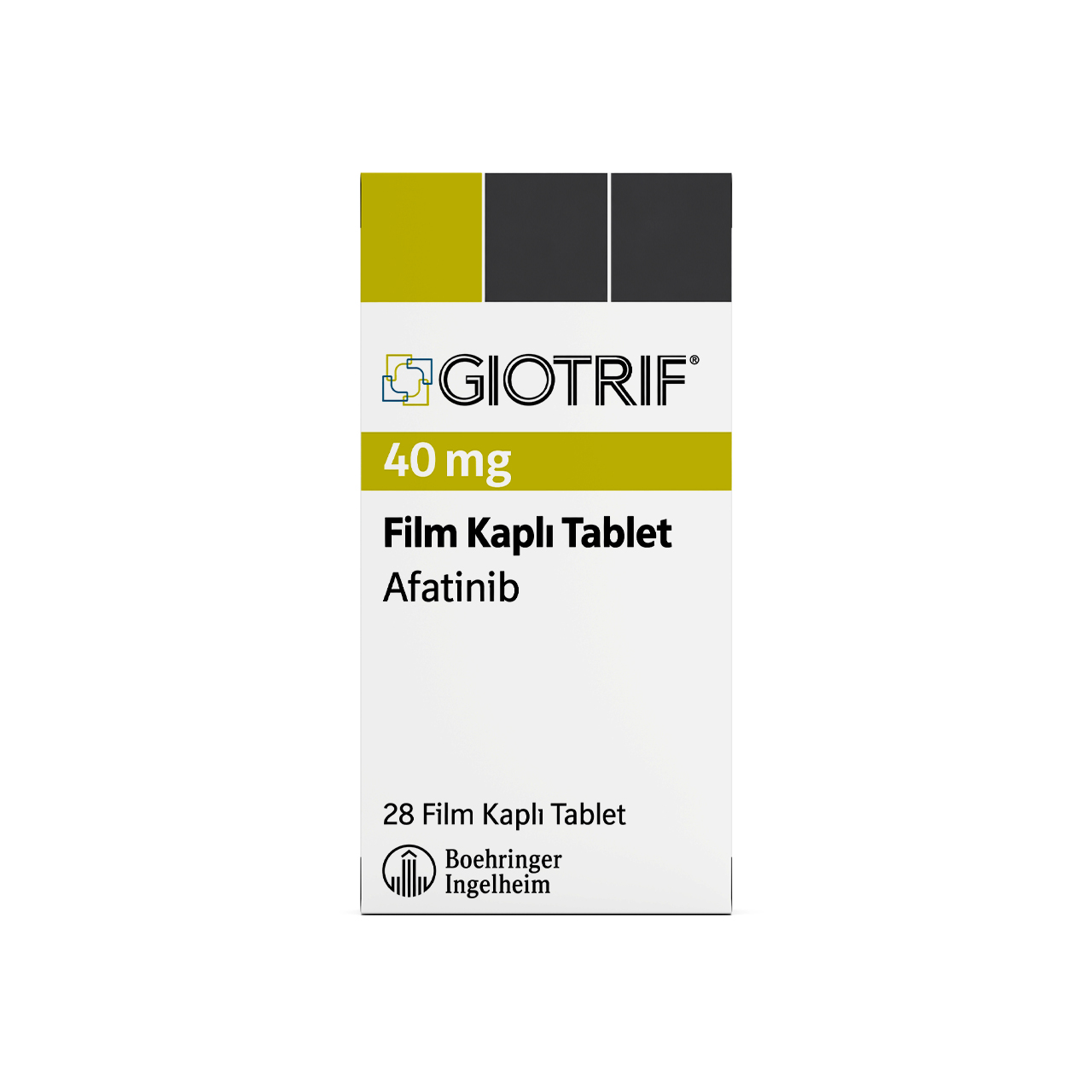
Giotrif 40mg contains afatinib, an oral targeted cancer medicine used to treat certain types of non-small cell lung cancer (NSCLC). It belongs to a class of medicines called tyrosine kinase inhibitors (TKIs), which block specific proteins involved in cancer cell growth and survival.
Afatinib works by inhibiting signaling proteins in the ErbB family, including the epidermal growth factor receptor (EGFR), also known as HER1, HER2, and HER4. These proteins can contribute to the growth and multiplication of cancer cells. Certain genetic changes in these receptors can cause cancer cells to grow abnormally.
Giotrif is prescribed for eligible adults with metastatic NSCLC involving specific EGFR mutations, depending on the approved indication and local prescribing guidelines. Molecular testing is important to determine whether the tumor has mutations that may respond to this treatment.
Giotrif is a prescription medicine that requires an oncologist’s supervision. Treatment selection depends on the cancer’s molecular characteristics, disease stage, previous treatment, and the patient’s overall health.
How Does Giotrif 40mg Tablet Work?
Giotrif 40mg is an oral targeted therapy containing afatinib, used to treat certain forms of advanced or metastatic non-small cell lung cancer. It works by blocking the activity of ErbB family proteins, which transmit signals involved in cell growth, division, and survival.
Afatinib irreversibly inhibits several receptor tyrosine kinases, including EGFR, HER2, and HER4. By interfering with these signaling pathways, it can help reduce the growth and multiplication of susceptible cancer cells.
The medicine is particularly relevant to tumors with specific activating EGFR mutations. However, not every lung cancer responds to this treatment, making molecular testing essential before therapy begins.
Giotrif may also cause effects in healthy tissues, particularly the skin and gastrointestinal tract. Diarrhea, acne-like rash, mouth inflammation, and dry skin are among its commonly reported adverse effects. Treatment requires medical supervision to assess effectiveness and manage potential complications.
Dosage of Giotrif 40mg :
Giotrif 40mg contains afatinib and is prescribed for eligible adults with specific forms of non-small cell lung cancer. The recommended starting dose for many eligible patients is 40mg taken orally once daily. The appropriate dose and treatment duration must be determined by an oncologist.
The tablet should be swallowed whole with water on an empty stomach. Take it at least one hour before or two hours after a meal, following the instructions provided by the prescribing healthcare professional.
Treatment generally continues until the cancer progresses or side effects become unacceptable. Depending on tolerability, the oncologist may temporarily interrupt treatment or reduce the daily dose.
If a dose is missed, follow the patient information leaflet or contact a pharmacist for guidance. Do not take a missed dose if fewer than 12 hours remain before the next scheduled dose. Never change the prescribed dose or stop treatment without consulting the treating physician.
Benefits of Using Giotrif 40mg :
Giotrif 40mg is a targeted anticancer medicine that may help control certain types of advanced or metastatic non-small cell lung cancer. Its benefits depend on the tumor’s genetic characteristics, cancer stage, and the patient’s response to treatment.
Potential benefits of afatinib treatment include:
- Targeted cancer treatment: Blocks specific ErbB family signaling proteins involved in cancer cell growth and division.
- Treatment for eligible EGFR-mutated NSCLC: Provides a treatment option for patients whose tumors carry qualifying EGFR mutations.
- Control of disease progression: May delay cancer progression in patients whose tumors respond to the medicine.
- An additional treatment option: May be prescribed for certain patients with metastatic squamous NSCLC that has progressed after platinum-based chemotherapy.
- Oral administration: The tablet can be taken at home according to the prescribed schedule, reducing the need for intravenous administration of this medicine.
Treatment outcomes vary, and Giotrif does not guarantee a cure. An oncologist should evaluate its suitability and monitor the patient’s response throughout therapy.
Side Effects of Giotrif 40mg :
Giotrif 40mg may cause side effects because afatinib also affects signaling pathways in healthy tissues. Commonly reported adverse effects include:
- Diarrhea, which may become severe
- Acne-like skin rash, redness, and itching
- Dry skin and nail infections
- Mouth sores and inflammation
- Nausea and vomiting
- Reduced appetite
- Nosebleeds and fatigue
Severe diarrhea can cause dehydration and kidney problems. Rare but serious complications include lung inflammation, severe skin reactions, liver injury, gastrointestinal perforation, and eye inflammation.
Seek immediate medical attention for severe or persistent diarrhea, difficulty breathing, blistering or peeling skin, severe abdominal pain, or sudden vision changes. Contact a healthcare professional promptly if side effects develop or worsen.
Regular medical follow-up, including liver function monitoring when indicated, is important during treatment. The prescribing oncologist may adjust or interrupt the dose when necessary to manage adverse reactions.
Conclusion :
Giotrif 40mg contains afatinib, a targeted therapy used to treat certain types of advanced or metastatic non-small cell lung cancer. Treatment eligibility depends on the cancer subtype and, where applicable, confirmed EGFR mutations. The medicine requires an oncologist’s supervision, appropriate monitoring, and individualized dose management to assess treatment response and minimize risks.
Important Medical Warning :
Use Giotrif 40mg strictly according to your doctor’s prescription. Follow your healthcare professional’s instructions regarding dosage, administration, and treatment duration. Do not self-medicate, change the dose, or discontinue treatment without consulting your oncologist. Inform your doctor about other medicines you take, existing medical conditions, and pregnancy or breastfeeding concerns. This medicine requires specialist supervision and appropriate monitoring throughout treatment.


Reviews
There are no reviews yet.