
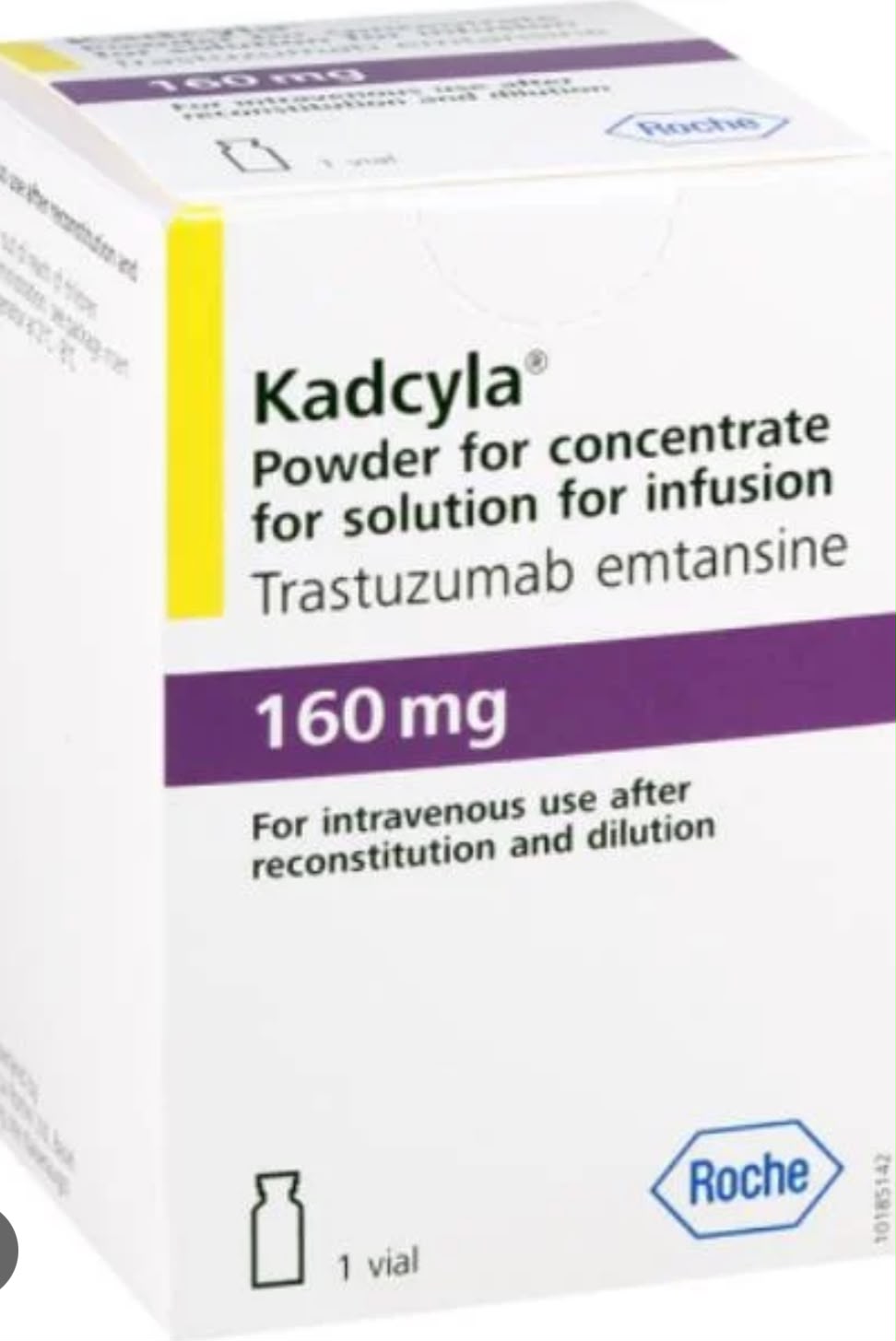
Kadcyla 160 mg contains ado-trastuzumab emtansine, an antibody-drug conjugate used to treat certain types of HER2-positive breast cancer. It combines trastuzumab, a monoclonal antibody that targets the human epidermal growth factor receptor 2 (HER2), with DM1, a cytotoxic agent that interferes with cell division.
HER2 is a protein found on the surface of cells that helps regulate cell growth. Some breast cancers have abnormally high levels of HER2, which can encourage cancer cells to grow and multiply rapidly. Kadcyla delivers its cytotoxic component to HER2-expressing cancer cells, helping damage them and inhibit their growth.
Kadcyla is used for eligible adults with HER2-positive early breast cancer who have residual invasive disease after neoadjuvant taxane- and trastuzumab-based treatment. It is also indicated for certain patients with HER2-positive, unresectable locally advanced or metastatic breast cancer who have previously received trastuzumab and a taxane.
Kadcyla is a prescription anticancer medicine administered intravenously by qualified healthcare professionals. Treatment eligibility depends on HER2 test results, previous therapy, disease stage, and the patient’s overall health.
How Does Kadcyla 160 mg Work?
Kadcyla 160 mg is a targeted anticancer medicine used to treat certain types of HER2-positive breast cancer. It belongs to a class of medicines called antibody-drug conjugates, which combine a targeted antibody with a cell-killing agent.
The trastuzumab component binds to HER2 proteins on cancer cells. After binding, the drug is taken into the cells, where the DM1 component is released and interferes with microtubules, structures required for cell division. This action disrupts cell division and can lead to cancer cell death.
Kadcyla also retains some of trastuzumab’s biological activity, including effects on HER2 signaling. By combining targeted delivery with a cytotoxic agent, it helps damage susceptible cancer cells while limiting exposure of other cells compared with some conventional chemotherapy approaches. However, it can still affect healthy tissues and cause significant adverse reactions.
Kadcyla is classified as a HER2-targeted antibody-drug conjugate. Its use, dose, and treatment duration depend on the cancer type, previous treatments, response to therapy, and the patient’s ability to tolerate treatment.
Dosage of Kadcyla 160 mg :
Kadcyla is a prescription medicine supplied as a powder for preparing an intravenous infusion. The 160 mg vial strength refers to the amount of medicine in the vial; it does not necessarily represent the dose prescribed for every patient.
For HER2-positive early breast cancer with residual invasive disease after neoadjuvant treatment, the usual recommended dose is 3.6 mg/kg of body weight, administered intravenously every three weeks for up to 14 cycles, unless recurrence or unacceptable toxicity requires a change in treatment.
For unresectable locally advanced or metastatic HER2-positive breast cancer, the usual recommended dose is also 3.6 mg/kg intravenously every three weeks, continuing until disease progression or unacceptable toxicity.
The dose may be reduced, delayed, or discontinued if significant side effects occur. Treatment decisions take into account liver function, platelet counts, heart function, lung symptoms, and other relevant clinical findings.
Kadcyla must be prepared and administered by qualified healthcare professionals. It should not be injected at home or used without specialist supervision. Follow the prescribed treatment schedule and attend all recommended monitoring appointments.
Benefits of Using Kadcyla 160 mg :
Kadcyla 160 mg contains ado-trastuzumab emtansine, a targeted medicine used to treat eligible adults with HER2-positive breast cancer. Its potential benefits depend on the disease stage, previous treatment, and individual clinical circumstances.
Targeted treatment: The trastuzumab component binds to HER2 proteins, helping deliver the cytotoxic agent to HER2-expressing cancer cells.
Disruption of cancer cell division: The DM1 component interferes with microtubules, preventing susceptible cancer cells from dividing normally.
Treatment after surgery: For eligible patients with residual invasive HER2-positive early breast cancer after neoadjuvant therapy, Kadcyla can reduce the risk of cancer recurrence or death compared with trastuzumab alone.
Treatment for advanced disease: Kadcyla is an established treatment option for certain patients with HER2-positive, unresectable locally advanced or metastatic breast cancer previously treated with trastuzumab and a taxane.
Convenient treatment schedule: Administration every three weeks allows treatment to follow a planned schedule, although individual monitoring and adjustments may be necessary.
Specialist-supervised care: Regular assessments help healthcare professionals evaluate treatment response, identify adverse effects, and determine whether therapy should continue.
Kadcyla does not guarantee a cure or the same response in every patient. The treating oncologist determines whether its potential benefits outweigh the risks for each individual.
Side Effects of Kadcyla 160 mg :
Kadcyla can cause mild to serious adverse reactions. The type and severity of side effects vary according to individual health, treatment history, and response to therapy. Commonly reported side effects include:
- Fatigue and weakness
- Nausea and vomiting
- Muscle and joint pain
- Headache
- Constipation
- Low platelet counts, which may increase bleeding or bruising
- Increased liver enzyme levels
- Peripheral neuropathy, including tingling or numbness in the hands and feet
Kadcyla can also cause serious complications, including liver injury, heart problems, lung inflammation, severe infusion-related reactions, and, rarely, a serious condition called nodular regenerative hyperplasia of the liver. In some cases, treatment may cause thrombocytopenia or other blood-related complications requiring dose adjustments or discontinuation.
Seek immediate medical attention for difficulty breathing, chest pain, severe bleeding, significant abdominal swelling, yellowing of the skin or eyes, or other severe or unusual symptoms. Contact your healthcare professional promptly if new symptoms develop during treatment.
Regular monitoring of liver function, platelet counts, and heart function is important. Kadcyla should only be administered under specialist supervision.
Conclusion :
Kadcyla 160 mg contains ado-trastuzumab emtansine, a HER2-targeted antibody-drug conjugate used to treat certain types of HER2-positive breast cancer. Its dosage and suitability depend on the treatment setting, previous therapy, and individual health factors. Administration requires qualified healthcare professionals and regular monitoring for adverse effects.
Important Medical Warning :
Use Kadcyla strictly according to your oncologist’s prescription. Follow your healthcare professional’s instructions regarding treatment schedules, monitoring, and follow-up care. Do not self-medicate or change or discontinue treatment without medical advice. Kadcyla must be prepared and administered by qualified healthcare professionals. Inform your doctor about all medicines you take, existing medical conditions, and any new or worsening symptoms during treatment.
Reviews
There are no reviews yet.